
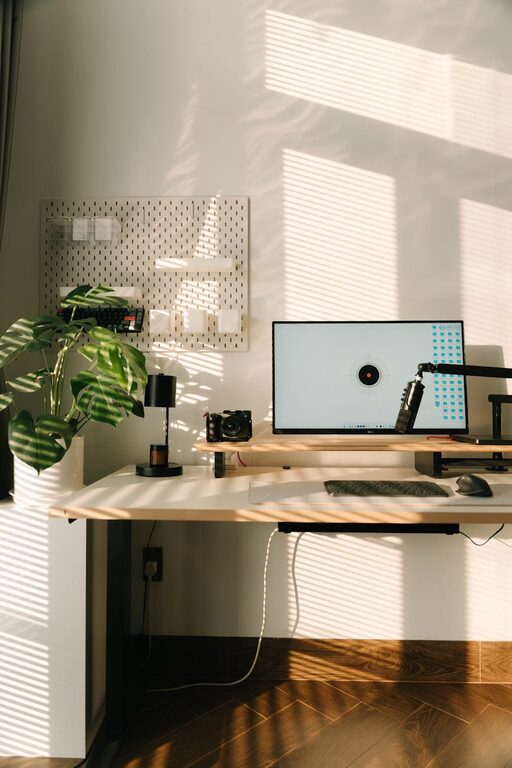
Creating a productive home office environment can make a significant difference in your ability to work efficiently and maintain a healthy work-life balance. Whether you’re new to remote work or looking to enhance your current setup, there are simple adjustments you can make to boost your productivity and well-being.
Why a Productive Home Office Matters
Working from home offers flexibility and comfort but also comes with unique challenges, such as distractions, lack of structure, and blurred boundaries between work and personal life. A well-designed home office can help you stay focused, motivated, and more organised.
Choosing the Right Location
Pick a Dedicated Space
Find a specific spot in your home to serve as your office. Ideally, this should be a quiet area with minimal distractions where you can focus on work. Using a defined space helps create a psychological boundary between work and relaxation.
Consider Natural Light
Position your workspace near a window if possible. Natural light can boost mood and energy levels, making it easier to concentrate. If natural light is limited, invest in good quality task lighting to reduce eye strain.
Ergonomics and Comfort
Select a Supportive Chair
A comfortable, ergonomic chair is vital to avoid back pain and posture problems. Look for adjustable chairs that support your lower back and allow your feet to rest flat on the floor.
Desk Height and Setup
Ensure your desk is at a height that allows your arms to rest comfortably at a 90-degree angle when typing. Keep your computer screen at eye level to prevent neck strain.
Add Ergonomic Accessories
Consider accessories like a footrest, wrist rests, or an adjustable monitor stand. These can improve comfort and encourage better posture throughout the day.
Reduce Clutter and Organise
Keep Essentials Within Reach
Organise your desk so that frequently used items are easily accessible. This prevents unnecessary interruptions and keeps your workflow smooth.
Use Storage Solutions
Incorporate shelves, drawers, or filing cabinets to keep papers and tools neatly stored when not in use. A tidy workspace helps clear your mind and reduces stress.
Digital Organisation
Maintain a clutter-free digital workspace too. Use folders and regularly clear your desktop to avoid distractions.
Minimise Distractions
Set Boundaries with Household Members
Let those you live with know your working hours and the importance of minimizing interruptions during these times.
Manage Noise Levels
Use noise-cancelling headphones or play background music if external noises are disruptive. Some people find soft instrumental music helpful for concentration.
Limit Social Media and Personal Devices
Keep personal devices out of your workspace or use apps that block distracting websites during work hours.
Establish a Routine
Set Regular Working Hours
Define clear start and finish times. Consistency helps signal to your brain when it’s time to work and when to relax.
Take Scheduled Breaks
Use techniques like the Pomodoro Technique—working in focused bursts with short breaks—to maintain energy and prevent burnout.
Dress for Work
Dressing as if you’re going to an office may psychologically prepare you to be productive.
Personalise Your Space
Add Plants or Art
Incorporate elements that make your office feel inviting and pleasant. Plants can improve air quality and add a touch of nature, while artwork can inspire creativity.
Keep Hydrated and Snack Smart
Keep a bottle of water nearby and healthy snacks on hand. Staying hydrated and nourished supports concentration and energy.
Utilise Technology Wisely
Reliable Internet and Equipment
Ensure your internet connection is stable and your devices are up to date to prevent frustrations.
Use Productivity Tools
Apps that help with task management, time tracking, and communication can streamline your work processes.
Review and Adjust Regularly
Your needs may change over time, so periodically assess your home office setup. Adjust lighting, furniture, or organisation systems as needed to maintain productivity.
—
Creating a productive home office environment doesn’t have to be complicated. With some thoughtful adjustments, you can develop a space that supports your work goals, keeps you comfortable, and helps maintain a healthy balance between your professional and personal life.